
Kenj Tanaka
Kenji F. Tanaka discusses his career in glial cell research, his vision for the JNC “Neurotools, Methods, and Neurochemistry Resources” category, and his advice for young scientists.
About
Editor Sspotlight: Interview with Kenji F. Tanaka, Senior Editor of JNC's “Neurotools, Methods, and Neurochemistry Resources” Category.
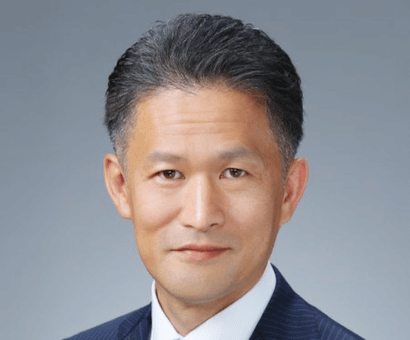
Kenji F. Tanaka is a Professor in Brain Sciences at the Institute for Advanced Medical Research, Keio University School of Medicine in Japan. He has been conducting research on glial cells for more than 20 years and is an expert in cell-type-specific and time-controllable gene expression techniques. Kenji F. Tanaka has been a member of the JNC Editorial Board since 2019 and recently transitioned to the role of Senior Editor for the new JNC manuscript category: “Neurotools, Methods, and Neurochemistry Resources”. We interviewed him to learn about his goals as Senior Editor for this category, as well as key moments in his career and advice for young scientists.
We would love to hear a bit about your background! Tell us about yourself.
I began my career around 2000, during the time of the genome project. Back then, we did not know how many genes existed. By 2003, when the genome project was completed, we had identified all the genes. Before that, for example, if researchers managed to clone a gene or generate a knockout mouse, simply observing the knockout mouse's phenotype was significant enough to publish in high-impact journals. However, after the completion of the genome project, gene cloning alone was no longer sufficient. This was the landscape back then.
By around 2010, gene-targeting technology had matured, giving us various tools for targeting specific cells. At that stage, we predominantly introduced fluorescent proteins, such as the green fluorescent protein (GFP), to visualize cell morphology, or channelrhodopsins to manipulate cell function. My work at this time began to focus on glial cells.
The reason I focused on glial cells is because of two main considerations: neurodegenerative disorders, such as Parkinson's and Alzheimer's, are characterized by progressive neuronal loss, whereas psychiatric disorders, which are functional, typically do not involve neuronal loss. At a high level, this distinction seemed straightforward, but even today, it is not so simple; despite advances in technology, we still do not fully understand the mechanisms of psychiatric disorders.
Twenty years ago, I believed that glial cells could be key to understanding psychiatric disorders, and that idea marked the beginning of my career. Since then, I have explored many areas, but today researchers are focused on understanding the circuit mechanisms underlying psychiatric disorders. While we aim to study neuronal circuitry, we now recognize that neurons do not operate alone. Neuronal networks are constantly supported by glial cells and vasculature, which provide oxygen and glucose to the brain.
So, while the neuronal circuit is crucial, it is equally important to study other complex structures and cell types, like blood vessels and vascular cells, to fully understand brain function. Many in neuroscience focus solely on neurons, but I try to integrate neurons, glial cells, and vasculature. Ultimately, I hope to uncover the mechanisms underlying psychiatric aspects of brain dysfunction.
What initially sparked your interest in Neurochemistry?
I was drawn to neurochemistry because of the field's deep expertise in glial cells, as opposed to the neuron-centric focus found elsewhere. As I mentioned, many researchers center their work solely on neurons and tend to overlook glial cells. So, about 20 years ago, I decided to pursue a career in neurochemistry because it offered a solid foundation in glial cell research.
Tell us about some interesting moments in your career and the greatest challenges that you have faced so far.
I have a strong interest in glial cells and in understanding circuit mechanisms, but to do this accurately, I needed precise gene-targeting technology. Back in 2006–2008, when I was at Columbia University, CRISPR/Cas9 had not yet been developed, so we relied on embryonic stem (ES) cells to manipulate genes. To generate a gene-targeted mouse, we had to combine genes within ES cells, a process that took about 3 years to complete a germline transmission. This was incredibly stressful—if I focused all my time on targeting a single gene, and it did not work, it could mean the end of my career. It was a very high-risk process.
At Columbia, I achieved my first success in gene targeting, which was a breakthrough for me. I was so lucky, and it was a huge relief and a memorable accomplishment. After that, the second, third, and fourth successes did not feel quite as remarkable, but that first success left a lasting impression on me.
What drives you in research and what impact does your research have on the world?
Many people focus on why diseases occur, which is certainly important. But my clinical supervisor would always remind me, saying, “Kenji, you need to understand why people recover—what is the mechanism behind recovery?” This perspective has always been crucial for me. While there are many reasons why people develop diseases, the recovery processes often follow similar patterns. This is why I am particularly interested in understanding the recovery state.
However, to study recovery mechanisms, we first need to work with animal models. I am still working on refining mouse models to better simulate these processes, and it is a challenge. But I want to understand the mechanisms of recovery, and that remains my final goal.
If you could meet any person from the Neurochemistry community, whether alive or from the past, who would it be and why?
Oh, that is a tough question. Probably Dr. Keiichi Uyemura, who served as president of the Japanese Society for Neurochemistry. If he was still alive, he would be around 90 years old. He was the person who initially encouraged me to join the Japanese Society for Neurochemistry and the International Society for Neurochemistry, and he is quite famous in this field. Although he was not my formal mentor, he provided invaluable guidance. He would often say, “Hey, Kenji, you should contribute to Neurochemistry.”
He also had a deep sense of humor and loved tennis. We would go to ISN conferences and other neurochemistry meetings, each of us with a tennis racket, ready to play. It was a unique way of mentoring—very light-hearted and without any pressure. If I could meet him again, I would love to share my recent advances with him, tell him how I have grown in the field, and talk about my main achievements.
Take us through one typical workday for you.
My role does not involve much teaching, but I do have a lot of administrative responsibilities at the medical school - about 50% of my time is spent on these tasks. I devote most of the remaining time to research, especially writing. But my favorite part of the day is observing histology data with my students through light and fluorescent microscopy.
Using these two types of microscopes is something I enjoy, especially because it allows us to see and assess phenotypes directly and simultaneously. While you can view images on a monitor, it is just not the same. Looking through the microscope's objective lens is a unique experience—the clarity and detail you see with your own eyes are incomparable. It is beautiful, and I love sharing that experience with my students.
You are the Senior Editor for the Neurotools, Methods, and Neurochemistry Resources category in the Journal of Neurochemistry. Why did you take on this role?
Given my career and extensive expertise in neuro resources, I felt this role was a great fit. Applying different methodologies and tools can be challenging, and many researchers struggle to effectively use already-developed technologies. As Senior Editor, I can share my experience with readers and help address the challenges that authors face. I believe I am well-positioned to provide this support in my role.
As the Senior Editor for the Neurotools, Methods, and Neurochemistry Resources category at JNC, what are your primary goals for this section?
I expect that this section will handle a substantial volume of papers, and I believe that fostering innovation is essential. However, it is equally important to focus on the application, or implementation, of these innovations. By emphasizing both innovation and practical application, I hope to encourage submissions that not only introduce groundbreaking tools and methods but also prove how these advances can be effectively utilized in research. My goal is to create a balance where innovative ideas meet real-world applicability, driving progress in neurochemistry.
You have just recently transitioned from handling editor to senior editor. Tell us more about that experience.
My time as a Handling Editor was a positive experience, and, fortunately, I did not encounter any major difficulties. Moving into the Senior Editor role has also been a smooth transition. My approach and decisions remain largely the same as before, so the shift has not been challenging. In this role, I feel that our shared scientific perspective keeps the process consistent, as the underlying principles and goals in our work do not change.
Are there any distinctive approaches or methods in the Neuorchemistry field that you find particularly effective or inspiring? How do you feel these contribute to the global research community?
You know the saying by John Keats, “Beauty is truth, truth beauty” In my section, there is a lot of beauty - beautiful images, beautiful data. I think this esthetic quality makes it easier to connect with readers, and it even has the potential to engage the public. Among all the sections, this one naturally lends itself to displaying the beauty of experimental science. So, the real question becomes how do we share this experimental beauty with the public? I believe that by highlighting the elegance in our data and visual findings, we can make neurochemistry more accessible and inspiring to a broader audience, bridging the gap between research and public understanding.
You have just attended the 5th ISN-JNC Flagship School as a speaker. How can we engage more young scientists and create a supportive environment for them?
First, the attendees at the Flagship School were already selected based on their achievements, so it is easy to engage with them—they are here for a reason, and we can encourage them without much difficulty. However, the bigger mission is to think about those who were not selected. How do we involve them in the broader community, especially when access to these opportunities can be so technically challenging? The goal, then, is to find ways to engage and support not only those selected but also those who are still on their path, to ensure that everyone has the chance to be part of this community.
What three skills do you believe make a PhD student successful?
First, having an appreciation for beauty - being able to recognise and feel the elegance in scientific work. Second, being skeptical or questioning, which means examining things from multiple perspectives. And third, especially during events like the ISN-JNC Flagship School, is always asking plenty of questions.
If you could give one piece of advice to a PhD student, what would that be?
My advice is simple: enjoy science!
What were you like as a PhD student, and how did your experiences during that time influence the way you approach your research today? - what personal characteristic makes you do things differently?
As a PhD student, I believed in myself, and I think this self-confidence is incredibly important. In research, self-doubt can make the journey much more challenging. Trusting in my abilities helped me overcome obstacles and brought me to where I am today.
Heading
Become a part of ISN
Join ISN now to become part of the ISN community, connecting people around the globe and across neurochemical specialities.
